
DJing
October 17, 2026
You've Never Heard of the Technics SL-DZ1200. That's Exactly Why Pioneer Won The DJ Industry
Technics built a digital turntable that looked better than any Pioneer CDJ. It also flopped so hard it handed Pioneer total club domination. Here's the untold story.

The Technics SL-1200/1210 vinyl turntable reigned undisputed king of DJ booths worldwide between 1972 and the late 1990s. Then everything changed when CDs and digital music arrived. We reveal Technics' fatal misstep and why Pioneer DJ rose to become the unrivalled industry leader, and pose the question, 'will it ever flip back?'
Many DJs don't even know that Technics released a digital CD deck called the SL-DZ1200 that was miles better looking than Pioneer's aesthetically challenged models, so why did Technics roll over and lose the top dog position to Pioneer DJ? Read on to find out.
The Fall of Vinyl and the Rise of CDJs & MP3s (1994–2006)
The core technological transition was the decline of vinyl and the rise of the CD and MP3 downloads. But, this doesn't explain why Technics fell out of favour and Pioneer took over. After all, both companies released CDJs, so what went wrong?
In our timeline here, you can see that Technics was a leader in CD player technology and released the SL-P1200 in 1986 which went on to become an industry standard for radio DJs and broadcasters. However, it wasn't aimed at DJs and had a very hefty launch price of roughly $1,300 in the US market, which equates to approximately $4,000 in today's money when adjusted for inflation, well out of the budget for most DJs.
Spotting a gap in the market for a cheaper unit aimed at DJs, Pioneer extended their consumer-led CD player business into the DJ world with the release of the CDJ-500 in 1994. They then progressively refined their technology culminating in the release of the CDJ-1000 in 2001. It quickly became the industry standard and DJ booths around the world now housed two Technics turntables, a DJ mixer and two CDJ-1000s. Pioneer had done it, they had secured a foothold in the lion's den.
Their timing was perfect. DJs old and new were actively pivoting to CDs and MP3s because vinyl was heavy, expensive, and increasingly impractical by comparison. Digital formats were cheaper, more portable, and downloadable. DJs could burn their own CDs with tracks they downloaded from the internet. First through file-sharing sites like Napster and LimeWire, then through stores like iTunes (2003) and eventually Beatport (2004).
There was also a generational shift. As a DJ who started playing in 2002, i witnessed this firsthand. Older DJs mostly stuck to what they knew and played vinyl. The new DJs were internet-savvy and mastered both vinyl and CD mixing, but in many cases favoured the latter. At the time I was gigging internationally, when DJs were the new rockstars flying from one club to another. I didn't want to travel through airports with hundreds of records. It was far more convenient to take a wallet of CDs and a laptop in case I wanted to burn some new ones once I arrived at my destination. Sometimes I would even burn CDs with my latest downloads in the green room, minutes before I hit the decks.
It's also true to say that mastering vinyl takes time, and many new DJs at the time wanted to take a shortcut by embracing the latest tech. The CDJ-1000 lowered the barrier to entry and made beatmatching easier. They featured waveforms, BPM readouts, digital cueing, looping and more.
Clubs learned how to embrace CDJs too, they were cheap to maintain and easy to put into the smallest DJ booths, even on a slant.
Realising their mistake, Technics scrambled to release a competing product. In 2004, Technics released perhaps their most ambitious product ever: a digital CD player with a real 10-inch direct-drive platter, designed to replicate the feel of an SL-1200 while embracing digital media. It had Technics DNA. It had genuine innovation. It looked stunning. So what went so disastrously wrong for Technics?
What Was the Technics SL-DZ1200?
The SL-DZ1200 was a direct-drive digital turntable, not a CDJ with a clunky jog wheel like the Pioneer CDJ-1000, but a digital turntable with a spinning platter. Its design was truly striking with a metallic silver finish that mirrored the classic Technics turntables while giving us a taste of what design-led futuristic DJ equipment could look like. It was a quintessential example of Y2K futurism chromecore design what still looks exciting today.
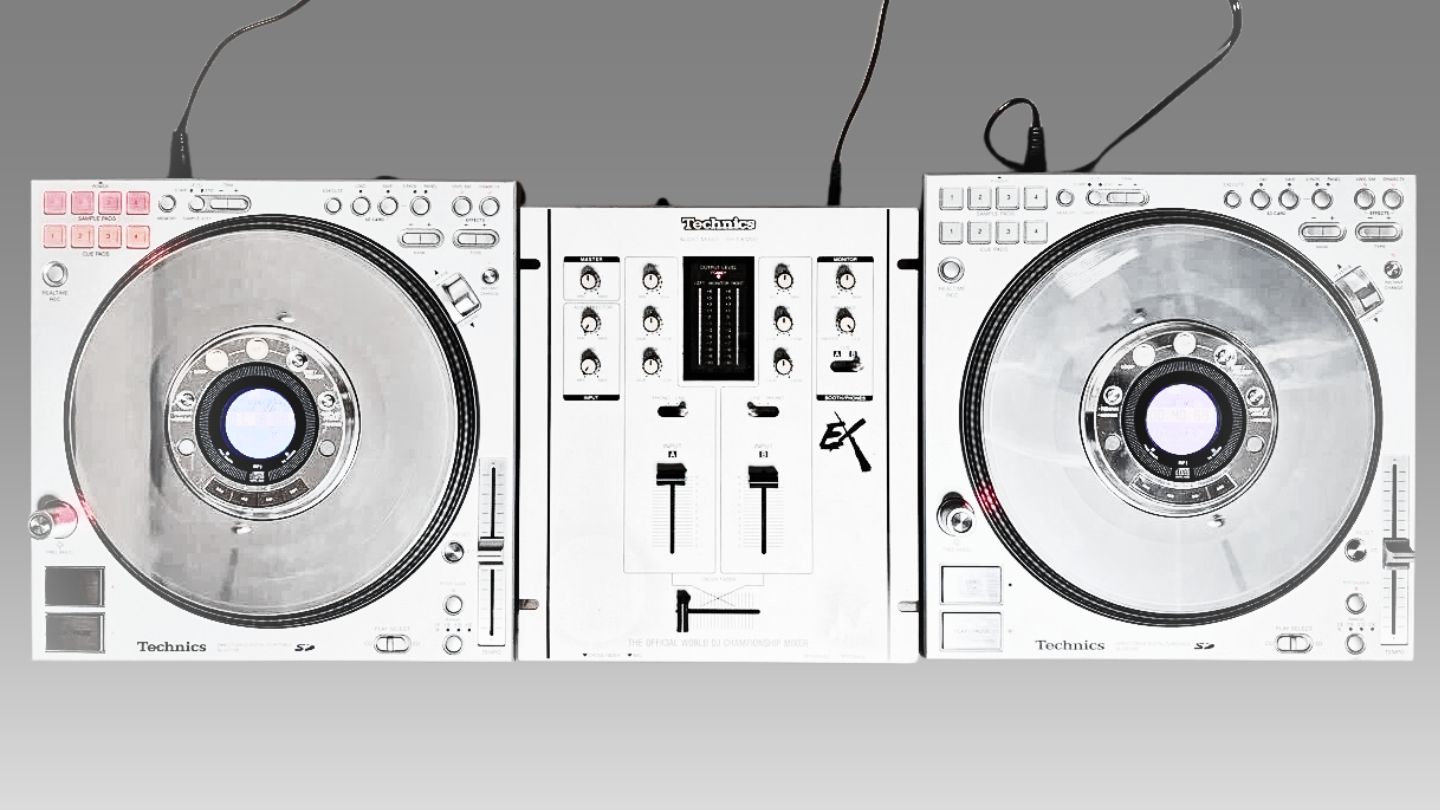
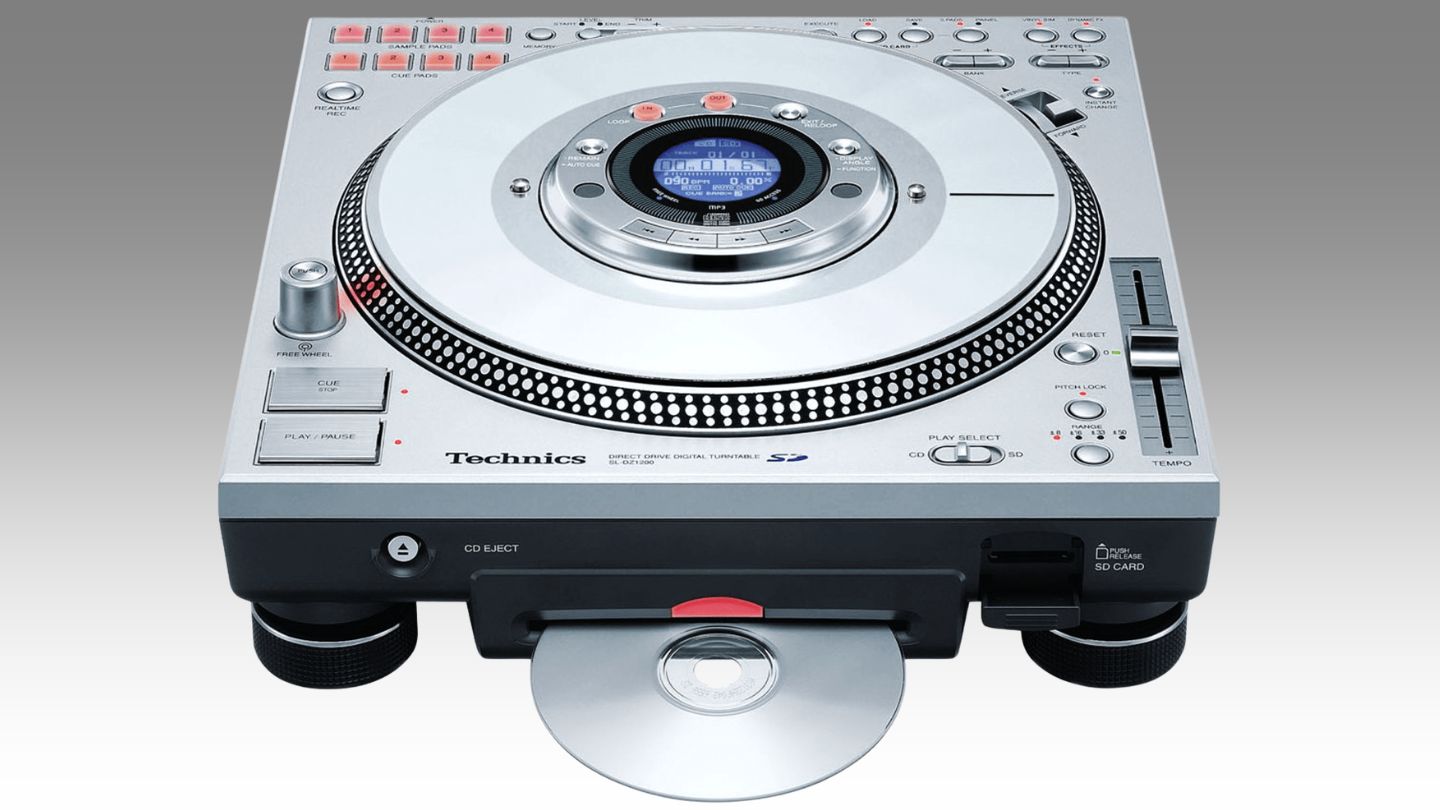
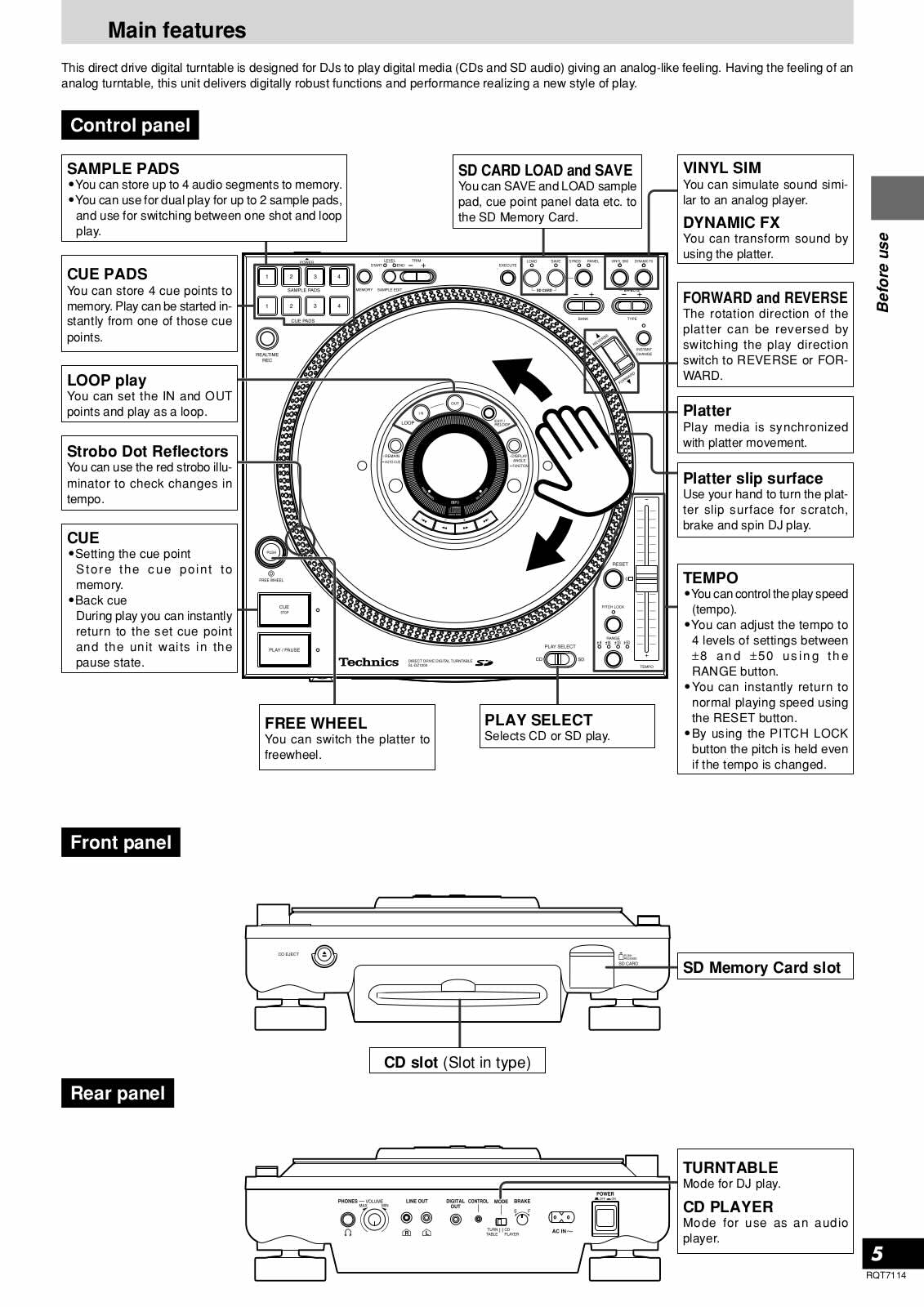
Core Specifications:
- Genuine 10-inch direct-drive platter (same motor technology as the SL-1200)
- CD, CD-R/RW, MP3, and AAC playback
- SD card support for samples and playback
- Vinyl simulation slip surface for scratching
- ±8% to ±50% pitch range with Pitch Lock
- 4 cue pads, 4 sample pads, looping
- Adjustable brake and start-up speeds
- Free Wheel function (coasts like vinyl)
- Built-in effects (Vinyl Sim, Dynamic FX)
- RCA and digital coaxial outputs
- Suggested retail price: $1,199.95
Technics marketed it as the digital heir to the SL-1200. The manual described it as “designed for DJs to play digital media… giving an analogue-like feeling”. It looked primed and ready to help Technics battle Pioneer for DJ booth supremacy, but it failed. So why?
Why DJs Hated It
The SL-DZ1200 failed on multiple fronts simultaneously and flopped remarkably quickly. Launched in 2004, it was discontinued by 2008 which was an extremely short shelf life for a flagship DJ product. A clear embarrassment for Technics.
The main culprit was the Pitch Lock, otherwise known as Key Lock. On vinyl turntables pitch and speed are interrelated. You can't change the tempo without affecting the key. Pioneer revolutionised DJing by creating Master Tempo, available from the CDJ-500 and up, an innovation that allowed DJs to speed up or slow down their tracks without affecting the pitch/key.
The ability to lock the pitch/key also helped with the popularisation of harmonic mixing in DJing. DJs such as Sasha and John Digweed were already mixing in key in the 90s, but the advent of Master Tempo technology and the release of Mixed In Key, (created by Yakov Vorobyev in 2006) made harmonic mixing easy and mainstream. Mixed In Key was the first software released to help DJs analyse the key of their tracks. I used to use it and write the key of each track on the CD with a marker pen. I could then choose the songs where keys matched or harmonised by referencing the Camelot Wheel.
Later, DJs used Mixed In Key to enter the key into the filename (metadata) of the track, so it was displayed on the CDJ screen along with the track title. Nowadays, DJ software programs like Rekordbox, Traktor and Serato will analyse the key and display it within your playlists.
Technics tried to create their own copy but it produced audible digital artefacts (glitch sounds) and distortion. When combined with scratching, it created a robotic, almost unlistenable artefacting. This heavily disappointed Technics' loyal customers who were above all else concerned with audio quality. A firmware update eventually reduced the problem, but it was too late.
The combination of bringing their digital DJ product to market a decade later than Pioneer, and then messing up the pitch lock was the fatal blow. Pioneer had already established itself and Technics would have had to pull off something magical to regain lost ground. However, that wasn't the end of their woes.
In addition, there were several features lacking like the absence of pitch bend buttons or a jog wheel. Pioneer CDJs had jog wheels. They allow the DJ to easily adjust the alignment of the beats. On the DZ1200 you had to physically push or pull the platter like a traditional vinyl turntable. For vinyl DJs this felt natural in theory, but in practice it was unreliable. Users reported a 1–2 second delay when pushing or slowing the platter. Compared to the instant change on a Pioneer jog wheel, it felt too lightweight and and unstable.
There's more. MP3s were incredibly popular with the new generation of digital DJs but files on the SL-DZ1200 were limited to 192 kbps, low quality even for 2004.
Overall, the build quality disappointed and their core customers felt somewhat betrayed. DJs expected Technics to honour their reputation of building timeless DJ technology, built to last and suited for professionals. The price was almost the same as the CDJ-1000MK2, and DJs swiftly chose the new industry standard.
Technics soon abandoned the product. No official repairs, no parts, no software updates.
It was a monumental failure that allowed Pioneer to take control and become the worldwide club standard DJ setup. A position they still hold to this day.
Could Technics Make a Digital Comeback?
Technics never really went away because SL-1200/1210 turntables are still considered the gold-standard for vinyl turntables. Many clubs have two of them alongside their Pioneer CDJs to this very day, despite Pioneer's release of their own PLX turntables. Many DJs still consider Technics to be a leader.
When vinyl sales declined through the 1990s and 2000s, Technics decided to stop manufacturing turntables. However, it was another bad call because vinyl sales then started to rebound in the mid-2000s and Technics had to pivot back into producing turntables.
The problem was the original tooling was dismantled and scrapped to free up factory space. Sadly, the skilled team was dispersed or retired. Technics CTO Tetsuya Itani confirmed the scale of the loss:
"Because the original 1210 turntables were manufactured for so many years, the manufacturing process had got to a very low cost. Now we need to invest in all the tools again, and the price now is much higher than the 1970s."
When they returned in 2016, they had to rebuild everything from scratch, which is why the SL-1200G cost $4,000. Their focus since has been entirely on vinyl, by refining the analogue turntable that made them legendary. It seems they did get their fingers burned several times and are now opting for the safe bet.
But the question lingers: could Technics re-enter digital?
The industry has changed and the technological ecosystem has grown. Pioneer DJ / AlphaTheta have the lead, an almost monopoly of club land. They have a defensive moat because they dominate the industry. Not only do they sell the most in-demand DJ equipment, they are in every club on the planet. In addition, Rekordbox is the most popular DJ software for professional DJs. If Technics were to enter the digital DJ market they would need to build complex software and hardware offer from scratch, something that has taken Pioneer DJ / AlphaTheta over 30 years to perfect. There are also many other players already established in the digital DJ market including Denon, Rane, Numark and more.
Arguments for a comeback:
- The Technics brand holds prestige and has a loyal fanbase
- Technics products have a better design aesthetic
- DJs are thirsty to try something new and stand out from the crowd
- Nostalgia is a major trend for Gen-Z and Gen-Alpha
The question is whether Technics has the appetite to try again.
Learn How to DJ with Digital or Vinyl Decks at LSA
Do you want to learn how to mix with vinyl or digital players? At London Sound Academy we offer 1-1 DJ courses for all ability levels. Our main DJ courses are taught with Rekordbox and AlphaTheta DJ equipment and we are one of the world's few Official Pioneer DJ Education Partners.
Start with our Beginner DJ Course if you want to explore digital DJing or join our Vinyl DJ Course if you want to master the mix on turntables.